
Tuscany: A Complete Travel Guide
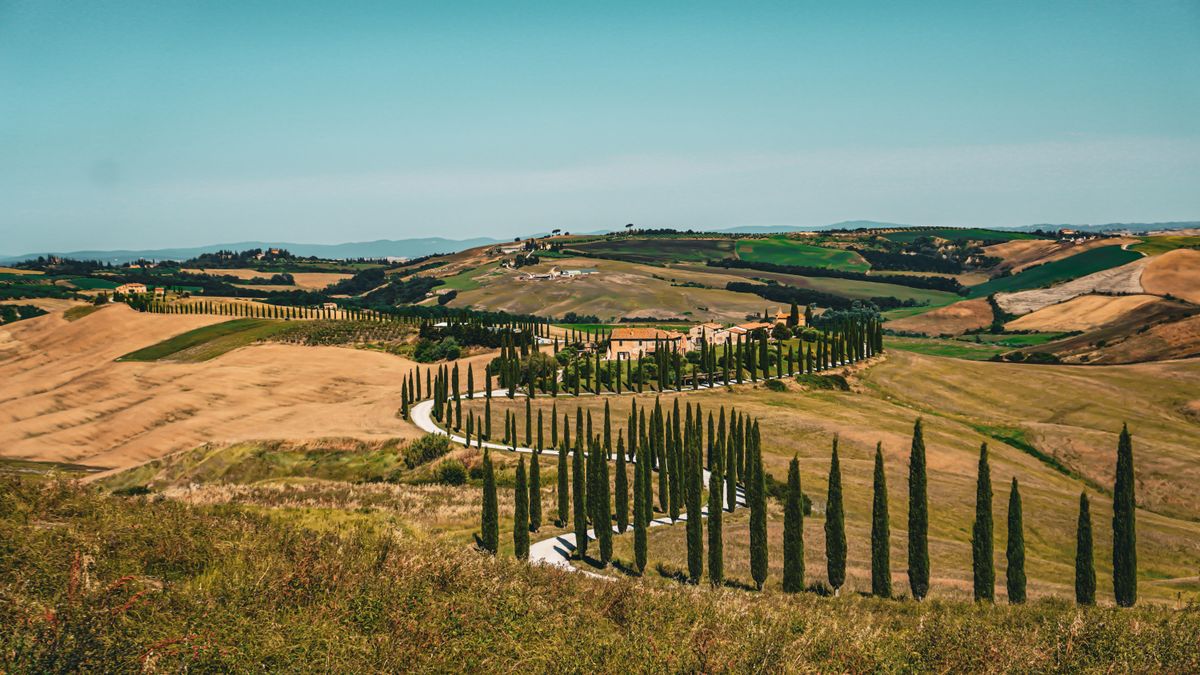
Tuscany is the Italy of rolling hills, cypress-lined country roads, medieval hill towns and Renaissance art — and this complete Tuscany travel guide tells you exactly where to go, when to visit and how to get around. Start in Florence, the region’s capital, home of the Uffizi and the Duomo, then slow down in Siena, San Gimignano and the Val d’Orcia, where the countryside looks like a postcard.
You will need at least four or five days for a first trip: two for Florence, and two or three for the smaller towns and the countryside. The best time to visit is late spring (May–June) or early autumn (September–October), when the weather is warm, the light is golden and the crowds are thinner. Trains link the main cities, but a rental car is the only practical way to reach the hill towns and the Val d’Orcia.
Table of Contents
Where to Go in Tuscany: The Towns You Shouldn’t Miss
Tuscany is a large region — about 23,000 square kilometres, roughly the size of Wales — so pick a base and explore from there. Most first-time visitors stay in Florence, take day trips, then spend a night or two in the countryside. Here are the places that deserve your time.
Florence — Art, the Duomo and the Best Views
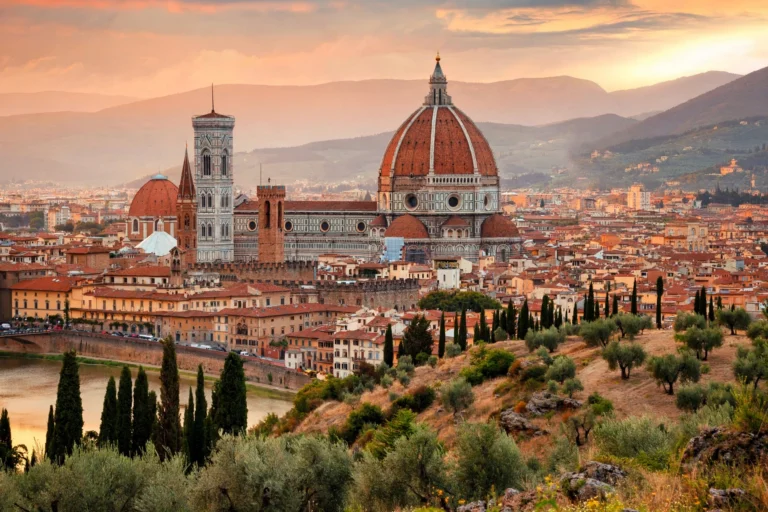
Florence is where the Renaissance began, and it still feels like an open-air museum. The Uffizi Gallery holds Botticelli’s Birth of Venus, the Duomo‘s dome by Brunelleschi dominates the skyline, and the view from Piazzale Michelangelo at sunset is one of the best in Italy. Give the city two full days: one for the historic centre and the Uffizi, one for the Oltrarno and the viewpoints across the river. For the full story, read our guide to Florence: Art, History and the Best Views.
Siena — The Medieval Rival
Siena is Florence’s great medieval rival, and its heart is the Piazza del Campo, a shell-shaped square where the Palio horse race is held twice each summer, on 2 July and 16 August. Climb the Torre del Mangia for a view over the rooftops, then visit the cathedral, with its striped black-and-white marble. Siena is best explored on foot — and its quiet back streets are the perfect escape from the crowds.
San Gimignano — The Town of Towers
San Gimignano is smaller, but its skyline is unforgettable: fourteen tall towers rise above the town, built by rival families in the Middle Ages. Walk the main street from gate to gate, climb the tallest tower for a view over the vineyards, and taste Vernaccia, the local white wine, in a small wine shop. Come early or stay late to avoid the midday crowds.
The Val d’Orcia — Rolling Hills and Cypress Roads
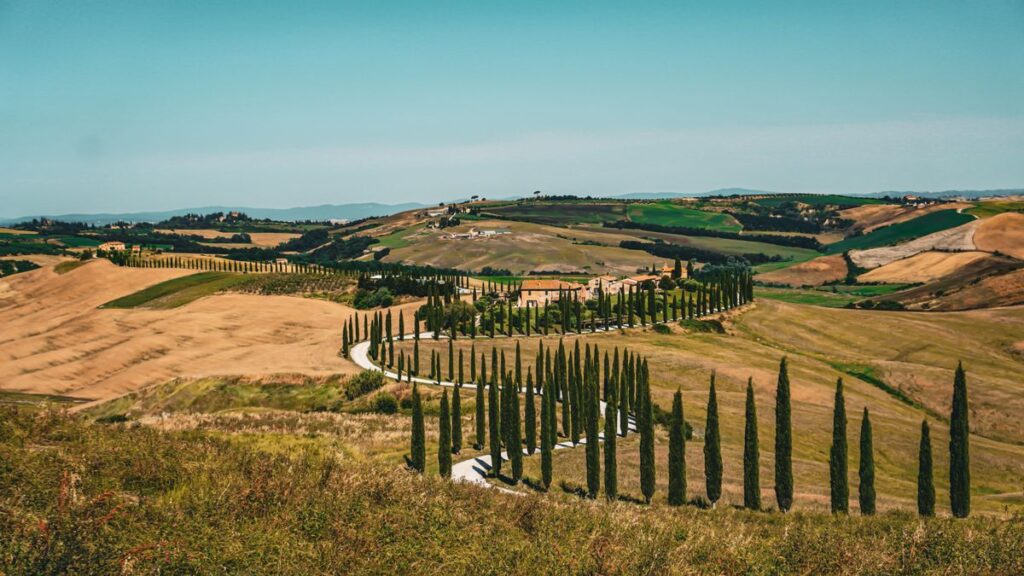
South of Siena, the Val d’Orcia is the landscape on every Tuscan postcard: rolling hills, lone farmhouses and cypress trees lining white gravel roads. It was added to the UNESCO World Heritage List in 2004 for its beautifully preserved Renaissance-era landscape — you can read the official listing on the UNESCO website. Pienza and Montalcino make good bases — drive slowly, stop often, and let the views do the talking.
Tuscany’s Towns Compared
Not sure where to spend your days? Here is how the main towns compare, so you can plan around what you love most.
| Town | Best for | How long | Getting there |
|---|---|---|---|
| Florence | Art, museums and food | 2 days | Direct trains from Rome in 1.5 hours |
| Siena | Medieval squares and the Palio | 1 day | Bus or train from Florence, 1–1.5 hours |
| San Gimignano | Towers, views and wine | Half a day | Bus from Siena or Poggibonsi |
| Val d’Orcia | Countryside, photography, slow travel | 1–2 days | Car only |
When to Visit Tuscany
Spring (April–June) is the sweet spot: wildflowers, mild weather, and no summer crowds yet. Summer (July–August) is hot and busy, but brings festivals like the Palio and long evenings outdoors. Autumn (September–October) is harvest time — golden vineyards, wine festivals, and the best light for photography. Winter is quiet and cheaper, though some countryside hotels close.
How to Get Around Tuscany
Trains are the easiest way to travel between the main cities. Florence is the hub: fast trains reach Rome in about 1.5 hours, and regional trains connect Pisa, Lucca and Siena. Book tickets on the official Trenitalia website, and remember to validate regional train tickets before boarding.
For the countryside, rent a car: buses are slow and infrequent, and the hill towns are almost impossible to reach without one. Watch out for the ZTL, the Zona a Traffico Limitato: a restricted-traffic zone in historic centres where driving without a permit brings a fine. Park outside the walls and walk in.
What to Eat and Drink in Tuscany
Tuscan food is simple, hearty and built around bread, beans, olive oil and meat. Order bistecca alla Fiorentina, the thick Florentine steak, in Florence; try pappa al pomodoro, a tomato and bread soup, and ribollita, a vegetable and bread stew, in Siena. The region’s wines are world-famous: Chianti Classico from the hills between Florence and Siena, Brunello di Montalcino from the Val d’Orcia, and Vino Nobile di Montepulciano. Finish with Vin Santo and cantucci, the almond biscuits made for dipping.
Practical Tips for Visiting Tuscany
- Book Uffizi and Accademia tickets online in advance — the queues are long, especially in spring and summer.
- Rent a car for the countryside, but check the ZTL rules before you drive into any historic centre.
- Carry cash: small towns, markets and family-run restaurants often prefer it.
- Validate bus and regional train tickets before you travel — fines for unvalidated tickets are common.
Start Planning Your Trip to Tuscany
Tuscany rewards slow travel. Linger over lunch in a hill town, drive a white gravel road just because it looks beautiful, and watch the sunset over the Val d’Orcia with a glass of Chianti in hand. Plan the big sights, then leave room for the unplanned.
Have you been to Tuscany, or are you planning your first trip? Tell us in the comments — which town is at the top of your list? And if you are still building your Italy itinerary, read our Rome in 3 Days: The Perfect First Trip guide next — it pairs perfectly with a few days in Tuscany.

3 Comments