Venice: Canals, Gondolas and Hidden Corners
Venice is unlike any other city in Italy, and that is exactly why it can overwhelm first-time visitors. There are no cars and no straight roads here, only water, bridges and narrow lanes. The Venice canals are not just a pretty backdrop: they are the streets of the city, the way people travel, shop and go to school. This guide covers the great sights, the quiet corners and the practical choices for a relaxed short stay, so you can enjoy the city without rushing from one famous view to the next. Give yourself two full days if you can, walk slowly, and let the water set the pace.
Table of Contents
St Mark’s Square
Start at St Mark’s Square, the grand open space that has been the heart of Venice for a thousand years. The basilica, with its golden mosaics and domes, is free to enter, though the queue is long in the middle of the day, so come early or late. Climb the Campanile for a view over the rooftops, the lagoon and the distant mountains. From the top, you can see how the Venice canals fan out across the city like streets. Then sit for a coffee at a historic cafe on the square, and watch the pigeons, the musicians and the slow flow of people crossing the square.
Getting Lost in the Calli
The best of Venice is found away from the square, in the calli, the narrow lanes that link one small canal to the next. Leave the main route to the Rialto Bridge behind and follow the sound of water instead of the crowds. You will find tiny squares, workshops where masks are still painted by hand, and wine bars serving cicchetti, the Venetian version of tapas. Getting lost here is part of the plan, and the city is small enough that you will always find your way back.
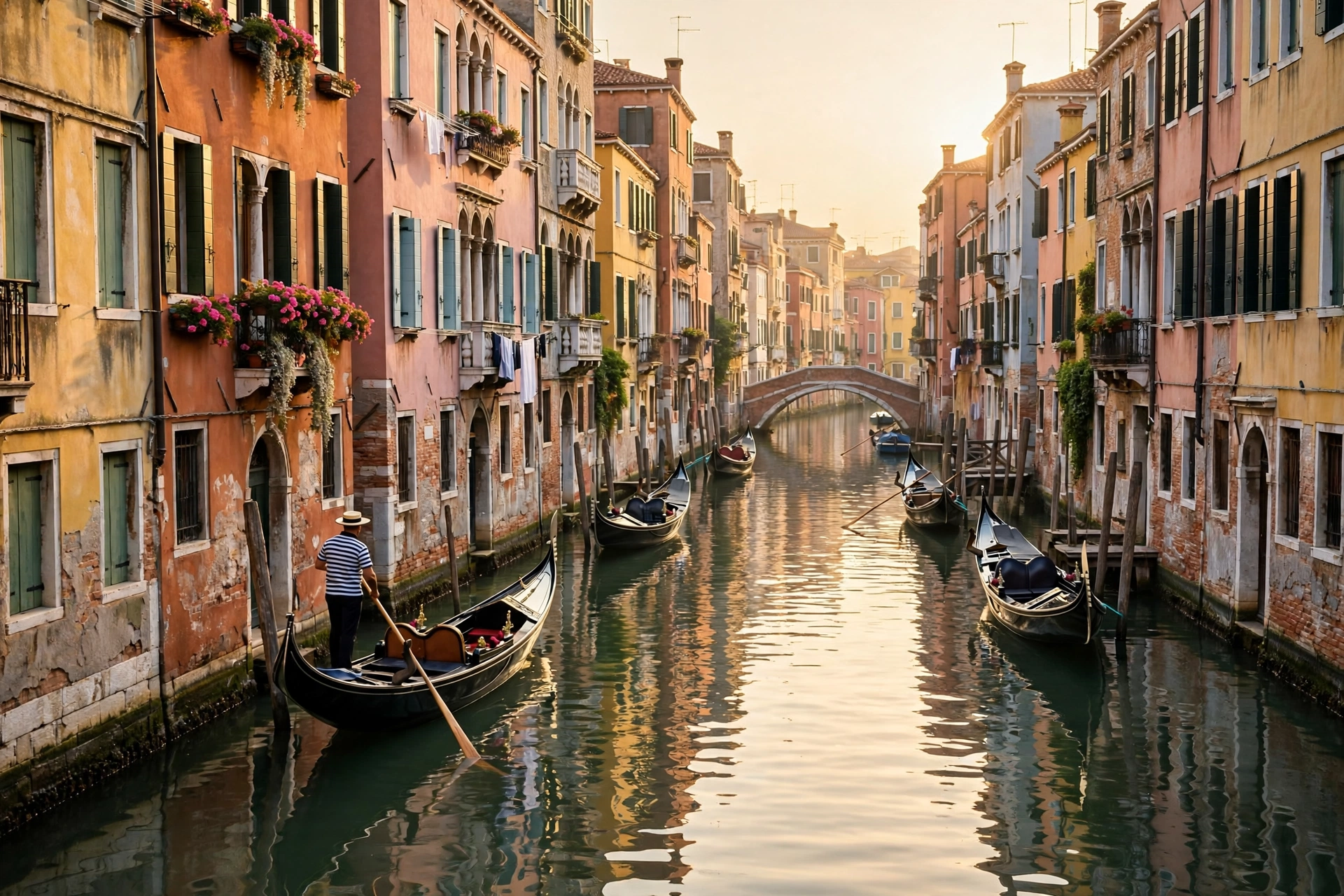
Look for the small bridges, the washing lines over the water and the doorways that open straight onto a canal. These quiet scenes show the everyday life of the city far better than any postcard.
Exploring the Venice Canals by Gondola or Vaporetto?
A gondola ride is the classic Venice experience, but it is expensive and lasts only about half an hour, so share the cost with friends or book it for sunset, when the light is best. Agree the price and the route before you step on board, and choose a quiet side canal as well as the Grand Canal if you can.
For everyday travel, take the vaporetto, the water bus that runs up and down the Grand Canal and out to the islands. Buy a one-day or multi-day pass if you plan to ride more than twice, and use it for Murano, famous for glass, and Burano, famous for lace and painted houses. Riding the vaporetto is also the cheapest way to see the Venice canals from the water, especially early in the morning when the city is still waking up.
Hidden Corners Beyond the Crowds
Once you have seen the main sights, head to the districts where Venetians still live and work. Cannaregio has quiet Venice canals, small gardens and family-run bacari where you can try cicchetti for a few euros. Dorsoduro is home to galleries, bookshops and the lively Campo Santa Margherita, a favourite meeting place in the evening. In Castello, walk east past the Arsenale to the peaceful waterfront, where the crowds thin out and the lagoon opens up. These hidden corners are not hard to reach: cross one bridge away from the main route, turn down a lane with no shops, and you are there. Take your time, sit by the water, and enjoy the slower side of the city.
Where to Eat and Stay Near the Water
Venice is at its best when you stay close to the water, but you do not need a grand hotel on the Grand Canal. A small guesthouse in Cannaregio, Dorsoduro or Santa Croce gives you quiet evenings and a short walk to the sights, and many rooms look out over the Venice canals. Book early for spring and autumn, when prices are high but the weather is kind.
For food, avoid the restaurants with large photo menus near St Mark’s Square. Instead, look for a bacaro with locals standing at the counter, order a few cicchetti and a glass of local wine, and try the fresh fish, risotto and seasonal vegetables. A simple lunch of cicchetti and a walk by the water is often the best meal of the trip.
Practical Tips for Visiting Venice
- Visit in spring or autumn for mild weather and fewer crowds.
- Book St Mark’s Basilica and popular museums online in advance.
- Wear flat shoes: Venice means bridges, steps and uneven paving.
- Check the vaporetto timetable before heading to the islands.
- Carry a small map or download one offline: phone signal can be weak in narrow lanes.
- Respect the city: do not sit on bridges or monuments, and keep the Venice canals clean, never throw litter in the water.
Before you travel, check opening times and transport updates on the official Venice tourism website, so you can plan around any changes. If you are planning a longer Italian trip, pair Venice with our guide to Rome in 3 Days, which shows how to see the capital in a short stay, and our Florence guide, which covers art, history and the best views. Venice, Rome and Florence work well together by train, and each city feels completely different.
In conclusion, Venice rewards travellers who slow down. See the great sights in the morning, then spend the afternoon wandering with no destination in mind. The Venice canals will still be there at sunset, glowing gold as the gondolas pass by, and that quieter side is the part you will remember longest.