
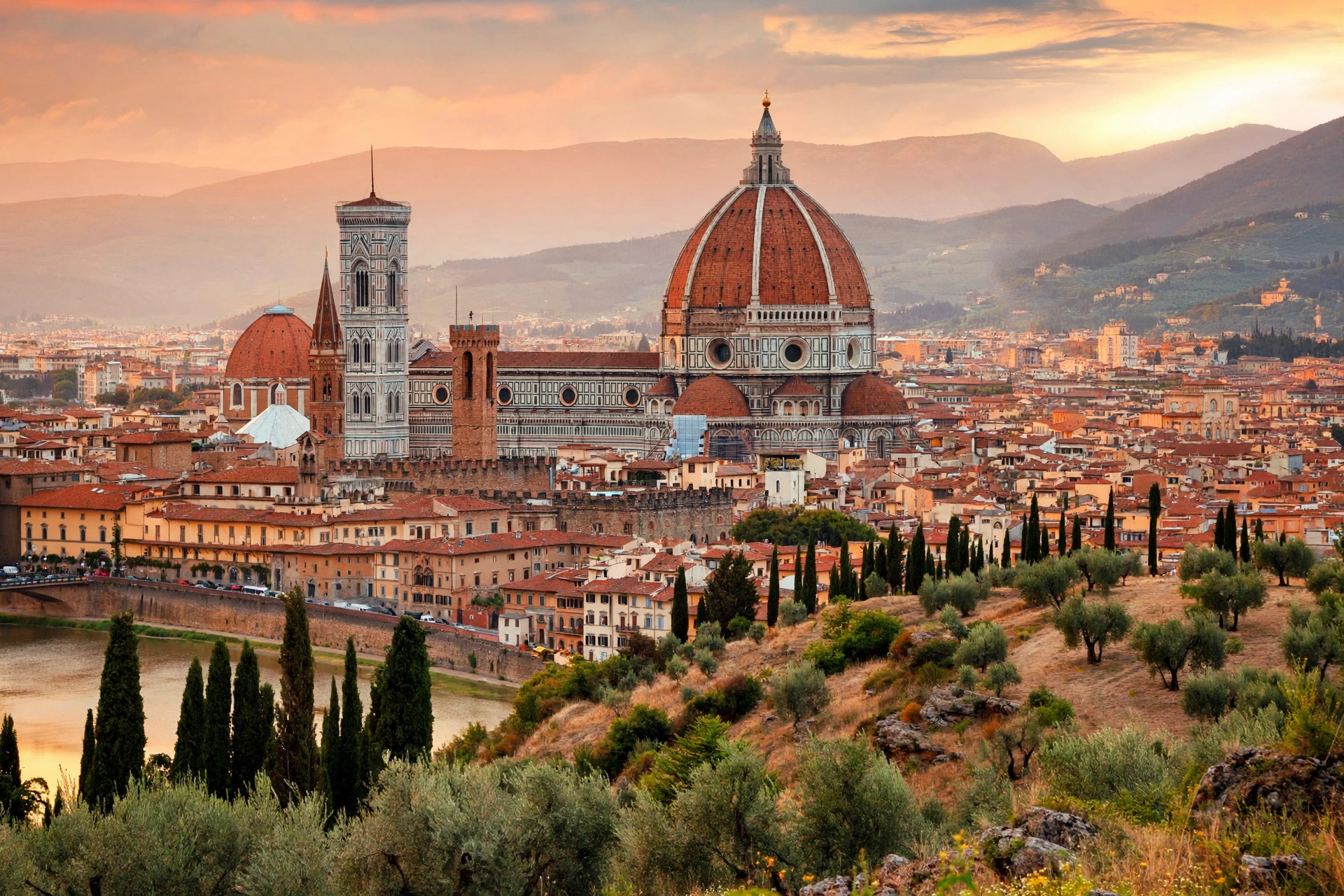
Florence: Art, History and the Best Views
Florence art is the reason most travellers come to Tuscany — and it rewards even a short visit. In one walkable historic centre, you can stand beneath Brunelleschi’s great dome, see Botticelli’s Birth of Venus in the Uffizi, and watch the whole city turn gold from Piazzale Michelangelo at sunset. This guide brings Florence art, history and the best views together in one practical plan, so you can see the masterpieces without rushing, eat well, and know exactly where to go next.
In short: start at the Duomo, book the Uffizi for the morning, cross the Ponte Vecchio in the afternoon, and end at Piazzale Michelangelo for sunset. That route covers the essential Florence art, Renaissance history and the best views in a single day.
Table of Contents
Why Florence Art Still Amazes Visitors
Florence art did not happen by accident. In the 1400s and 1500s, wealthy banking families — above all the Medici — paid the best artists of their time to paint, sculpt and build in this one small city. Leonardo da Vinci, Michelangelo, Botticelli and Brunelleschi all worked here, often for the same patrons, and their work is still in the churches, palaces and museums where it was made to be seen. That is what makes Florence different from a city with a single great museum: here, the art is the city.
Walk for ten minutes and you pass from a frescoed chapel to a sculpture-filled square to a palace courtyard, all without a ticket. Give Florence art at least a full day, and ideally two, because the best moments are often unplanned: a quiet side street, a church door left open, a view at the end of a lane.
The Duomo: Start with Brunelleschi’s Dome
Start at the Duomo, the great cathedral with Brunelleschi’s red-tiled dome. Climb the 463 steps to the top for a close look at the frescoes inside the dome and a sweeping view over the rooftops. The climb is narrow and steep, with no lift, so wear comfortable shoes, take water, and go early if you can — the light is softer and the stairways are quieter. Book dome tickets in advance, as places are limited and sell out quickly.
Don’t Miss the Baptistery
The Baptistery opposite is worth a look for its golden doors and glittering mosaics, and the bell tower beside the cathedral — Giotto’s Campanile — offers another fine climb if the dome is fully booked. Together, these three buildings explain why the Duomo square feels like the heart of Florence: faith, art and engineering, all in one place.
Florence Art in the Uffizi and Beyond
The Uffizi Gallery holds one of the world’s great collections of Renaissance art, so do not try to see everything. Focus on Botticelli’s Birth of Venus and Primavera, Leonardo’s early works and the long corridor with its views over the Arno. Book a timed ticket online through the official Destination Florence tourism site to avoid the long queue, and allow two hours. Afterwards, cross the Ponte Vecchio, the old bridge lined with jewellery shops.
Michelangelo’s David and the Accademia
A short walk away, the Accademia is home to Michelangelo’s David, the marble giant that has become the symbol of Florence art. Arrive at opening time, book ahead, and give the sculpture a full, slow look — from the front, the side and the back — before moving on to Michelangelo’s unfinished Prisoners, which show a figure struggling to emerge from the stone. If you only have time for two museums, make them the Uffizi and the Accademia.
Piazzale Michelangelo at Sunset
For the best view in Florence, climb to Piazzale Michelangelo in the late afternoon. From the terrace above the river, the whole city spreads out below you: the Duomo, the tower of the Palazzo Vecchio, and the Arno winding between its bridges. Stay for sunset, when the stone turns warm and pink. It is free, it is open, and it is the view you will remember longest.
Other Great Viewpoints
Other viewpoints are worth the climb too: the Boboli Gardens behind the Pitti Palace, the tower of the Palazzo Vecchio, and the San Miniato al Monte church above Piazzale Michelangelo, which is quieter at sunset and even more atmospheric. Choose one viewpoint per day — the city looks different from each one, and rushing between them spoils the pleasure.
Tuscan Food and Practical Tips
Florence is a serious food city. Try ribollita, a thick bread and vegetable soup, and bistecca alla fiorentina, the great T-bone steak that is usually shared between two people. In the San Lorenzo and Sant’Ambrogio markets you can taste cheese, cured meats and olive oil, and buy a picnic to eat by the river. Finish with gelato — look for small shops with muted colours and flavours in metal tubs, not bright piles in the window.
- Book ahead: reserve the Duomo climb and Uffizi tickets online in advance.
- Stay central: stay in the historic centre — everything is within walking distance.
- Eat local: eat where the menus are in Italian first, not in five languages.
- Carry cash: carry cash for small shops and markets.
Your Turn: Plan Your Florence Day
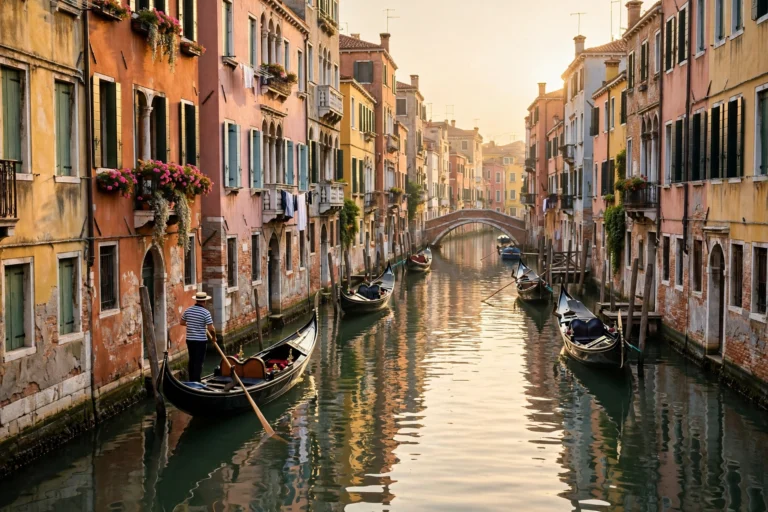
Florence is best enjoyed slowly. See the great art, climb for the views, eat well, and leave time to simply wander. Now it is your turn: which will you visit first — the Duomo, the Uffizi or Piazzale Michelangelo at sunset? Tell us in the comments, and share this guide with someone planning a trip to Italy. Then plan your next stop with Rome in 3 Days: The Perfect First Trip and Venice: Canals, Gondolas and Hidden Corners.

One Comment