
How to Travel Italy by Train: A Simple Guide
Learning how to travel Italy by train is the easiest way to explore the country — and often the fastest way to travel between its great cities. High-speed trains link Rome and Florence in about 90 minutes, regional trains reach the small towns and coastal villages the fast trains skip, and the whole system runs on two simple rules: book high-speed tickets early, and always validate a paper regional ticket before you board. This guide explains the two kinds of train, how tickets and passes work, and how to book without stress.
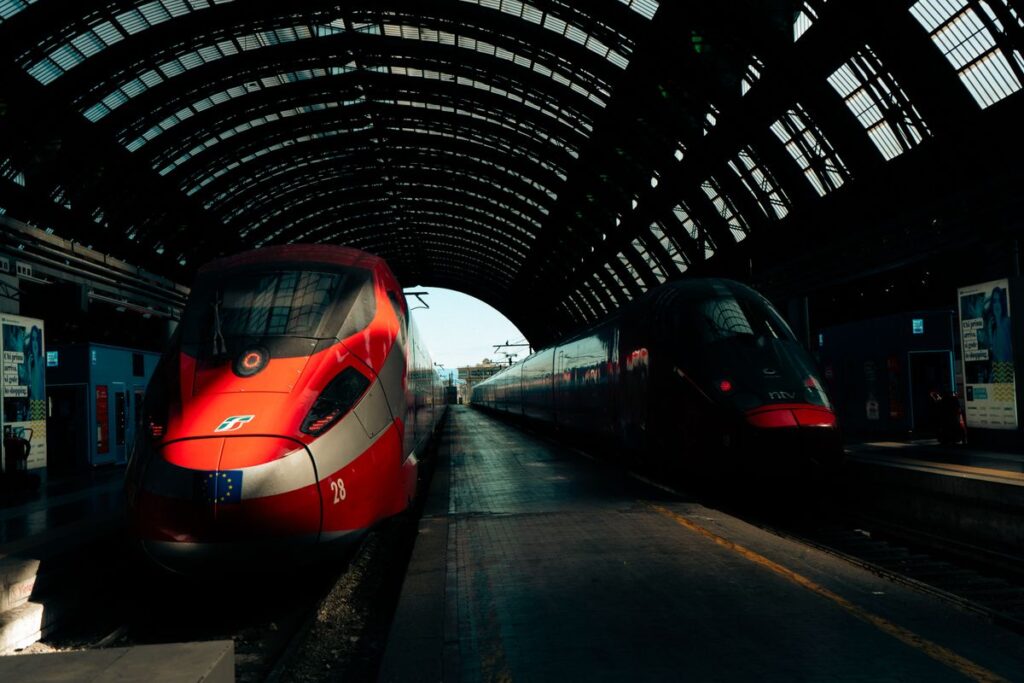
Table of Contents
High-Speed Trains: Frecciarossa and Italo
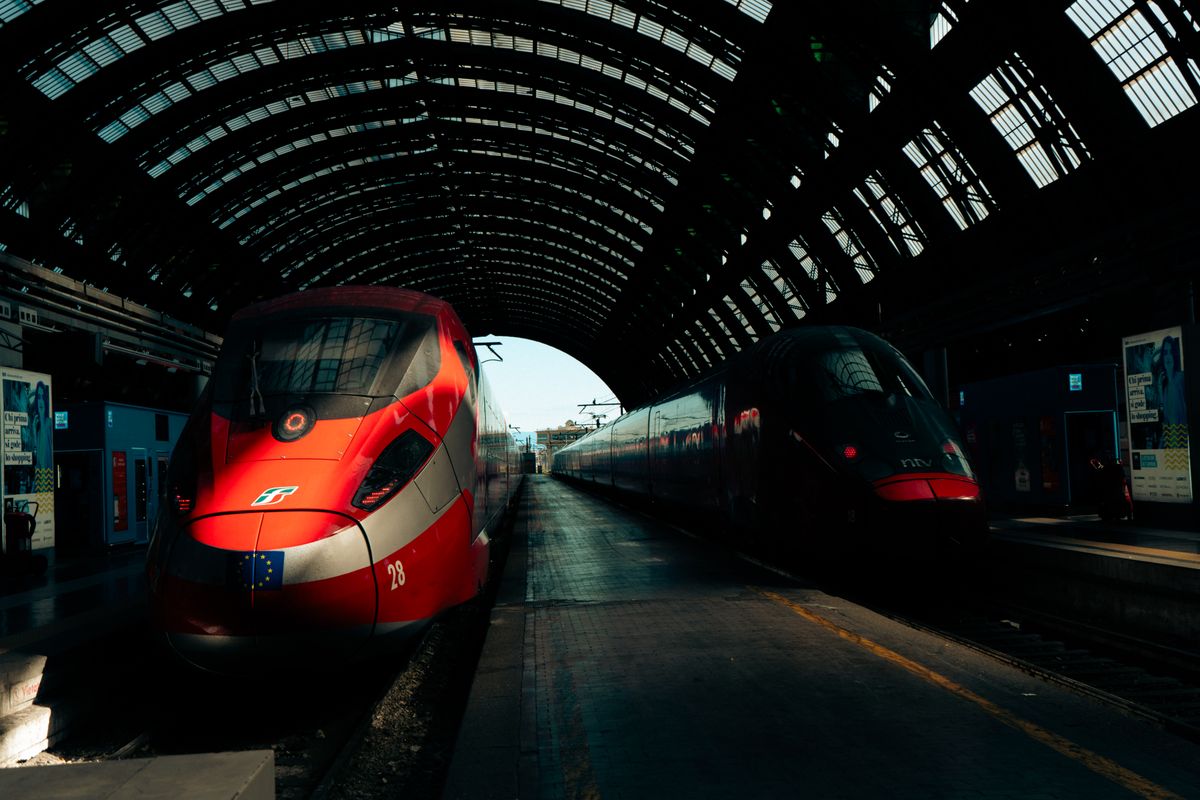
High-speed trains run between the big cities on the main lines: Turin to Milan, Milan to Venice, Milan to Florence, Florence to Rome and Rome to Naples. Two companies compete on these routes: Trenitalia, the state operator, with its red Frecciarossa trains, and Italo, a private company. Both are comfortable, with reserved seats, air conditioning and power sockets, and Frecciarossa trains also have free Wi-Fi.
The Frecciarossa runs at up to 300 km/h on Italy’s dedicated high-speed lines, and the fastest Rome–Milan services cover the route in just under three hours, city centre to city centre — quicker, door to door, than flying. Trains arrive in the heart of the city: Roma Termini in Rome, Milano Centrale in Milan, Santa Maria Novella in Florence, and Santa Lucia in Venice, right on the Grand Canal.
Journey Times at a Glance
| Route | Fastest time | Notes |
|---|---|---|
| Rome – Florence | ~1h30 | Departures roughly every 30 minutes |
| Rome – Naples | ~1h10 | Among the fastest links in Italy |
| Milan – Rome | ~3h | Longest domestic high-speed run |
| Milan – Venice | 2h15–2h30 | 30+ direct trains a day |
| Florence – Venice | ~2h | Direct, no changes |
| Milan – Florence | ~1h50 | Via Bologna |
Times are the fastest scheduled services; trains with intermediate stops take a little longer. Check live timetables on trenitalia.com or italotreno.it before you travel — times change by season.
Regional Trains
Regional trains are slower and stop at every station, but they reach the places high-speed trains skip: small towns, hill villages and quiet stretches of coast. They have no reserved seats, so you can simply turn up and board. They are cheap, with fixed fares that never rise closer to departure, and the best way to travel in Tuscany, Liguria and Umbria. Check the timetable: some lines have only a few trains a day.
Regional trains are also how you reach the Cinque Terre — the local line hops between the five villages in minutes — and how you explore the Val d’Orcia from Siena or Chiusi. Our Cinque Terre guide and Tuscany guide both build their days around regional trains.
Tickets and Passes
Before you decide how to travel Italy by train, it helps to know how tickets and passes work. Train tickets can be bought online, at station machines, at the ticket counter, or in the Trenitalia and Italo apps. High-speed tickets are for a specific train and time, and fares work like airfares: book a few weeks ahead and Rome to Florence can cost under €20, while the same seat on the day can cost several times that. Regional fares are fixed, so there is no reason to buy them in advance.
For long trips, a rail pass can save money, but for short stays single tickets are usually cheaper. The Interrail Italy Pass gives a set number of travel days within a month on Trenitalia trains — but it is not valid on Italo, and you still need a seat reservation on high-speed trains, usually around €13. Do the maths before you buy: add the reservation fees, and compare against advance single tickets.
The Validation Rule
This is the rule that catches more visitors than any other. A paper regional ticket must be stamped in one of the small green or yellow validation machines on the platform before you board. The machine prints the date, time and station on the ticket, and the ticket is then valid for four hours. An unvalidated ticket counts as no ticket at all — even though you paid for it — and inspectors fine passengers on the spot, typically €50, rising if you pay late.
Two exemptions: digital tickets bought in the app validate themselves automatically at departure time, and high-speed tickets with an assigned seat never need stamping. If in doubt, stamp it — validating a ticket that did not need it costs nothing.
Booking Tips
- Book high-speed tickets online as soon as your dates are fixed — the cheapest fares sell first.
- Travel light. There is limited space for luggage on Italian trains, and no porters.
- Arrive at the station ten minutes before departure — platforms are announced shortly before the train leaves.
- Keep your ticket until you leave the station. Inspectors sometimes check on arrival.
- Avoid Friday and Sunday evenings if you can: trains fill up and sell out on those days.
How to Travel Italy by Train: Planning Your Route
Trains make a classic first trip simple: fly into Rome, take the fast train to Florence, then on to Venice, and finish in Milan — all without a car. Our Rome guide and Venice guide show what to do at each stop, and our Florence guide covers the city in between.
So, now you know how to travel Italy by train — where will the train take you first? Book the fast trains early, stamp the regional tickets, and enjoy the view from the window — the Tuscan hills between Florence and Rome are the best free show in Italy. Tell us your route in the comments, and check our other Italy guides to build the rest of your trip.
