
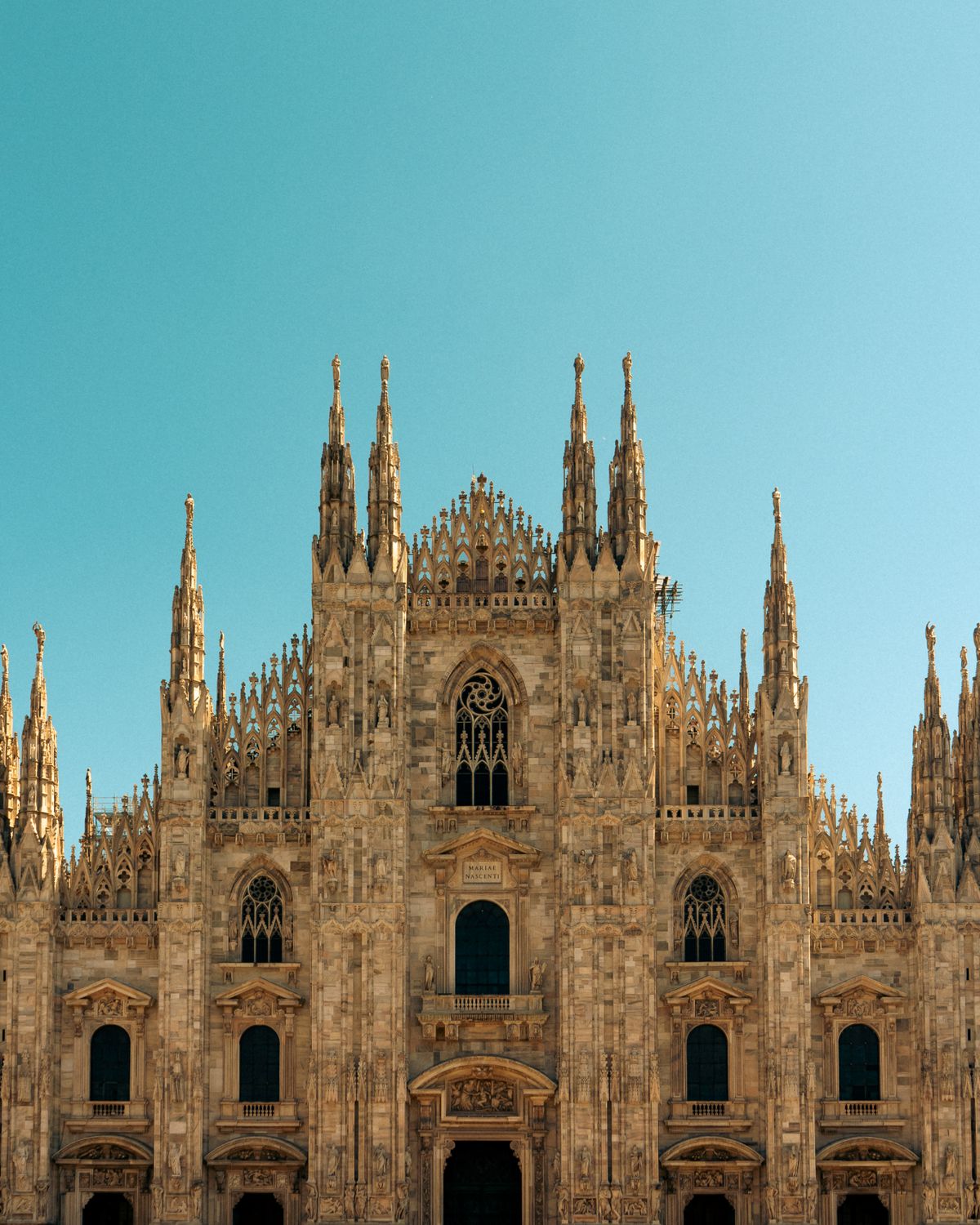
Best Time to Visit Milan
The best time to visit Milan is April to June or September to October, when the weather is mild, the city is fully open, and the crowds are manageable. If you want the single sweetest window, pick May or September: comfortable temperatures between 18°C and 24°C, thinner crowds than the peak summer months, and hotel prices significantly lower than in July and August.
Milan runs on its own calendar: the fashion and design weeks fill hotels and push prices up several times a year. This guide breaks down Milan season by season — temperatures, crowds, prices and events.
Table of Contents
Milan at a Glance — Weather, Crowds & Prices by Season
Milan has a moderately continental climate: hot, humid summers and cold, foggy winters, with sharper seasonal swings than most Italian cities further south. Fog is a genuine feature of the Po Valley from November to February.
| Season | Months | Avg high / low | Crowds | Prices |
|---|---|---|---|---|
| Spring | Mar–May | 16–24°C / 5–13°C | Shoulder (high in Salone week) | Medium, very high in Salone week |
| Summer | Jun–Aug | 28–31°C / 17–19°C | High | Peak |
| Autumn | Sep–Nov | 12–25°C / 5–15°C | Shoulder (high in Fashion Week) | Medium, peak in Fashion Week |
| Winter | Dec–Feb | 7–10°C / around 0°C | Low | Lowest |
Temperatures: 1991–2020 averages (Climates to Travel, Milano Linate normals). The coldest month is January, averaging a high of 7°C and a low near 0°C; the hottest is July, averaging a high of 31°C and a low of 19°C.
Spring in Milan (March–May)
Spring is the most consistently rewarding season, and April and May stand out as the best individual months. Temperatures climb from around 16°C in March to a comfortable 24°C by May, the parks bloom, and outdoor aperitivo season begins. Crowds stay manageable before the June school-holiday surge.
One week changes everything: Salone del Mobile (Milan Design Week) in mid-April. The world’s most important design fair drew 316,342 visitors from 167 countries in 2026, and the city-wide Fuorisalone turns the Brera, Tortona and Navigli districts into one giant exhibition. It is the single most exciting week in Milan’s calendar — and the most expensive. A three-star hotel that lists at €140 a night can run €380–500 during Salone week, so book months ahead if your dates overlap, or steer around it if you are travelling on a budget.
Summer in Milan (June–August)
Summer in Milan is hot and humid, with highs regularly reaching 30°C — walking long distances outdoors is uncomfortable between noon and 4pm. July and August are peak season: school-holiday crowds, peak hotel prices, and long queues at the Duomo rooftop.
August has a twist most visitors do not expect. Milan empties as locals leave for Ferragosto, the 15 August holiday: many family-run restaurants, small shops and neighbourhood services close for one to three weeks. The city feels quieter, but also less like itself. If you do visit in summer, come in June, when the days are longest, the evenings are warm, and the worst of the heat has not yet arrived.
Autumn in Milan (September–November)
September might be the single best month to visit Milan. The summer heat is gone, daytime highs sit around 24–25°C, and the light turns golden — it is also an excellent month for day trips to the lakes, with the water still warm from summer. Crowds thin out after the first weeks, though the last week of September brings Milan Fashion Week (women’s shows), when hotels fill and prices spike again.
October stays pleasant at first, then cools and turns wetter — autumn brings the most rain of the year, so pack a compact umbrella. By November the fog returns, temperatures drop to around 12°C, and the city quiets down — a good season for food lovers and museum-goers.
Winter in Milan (December–February)
Winter is cold, grey and often foggy, with highs of 7–10°C and lows around freezing. But it is also the cheapest and quietest time to visit: January and February (outside Fashion Week) have the lowest hotel rates of the year and near-empty museums. If your trip is about art, shopping and restaurants rather than sunshine, winter works well.
December has its own magic: the Festa di Sant’Ambrogio on 7 December coincides with the La Scala opera season opening and the Christmas markets. February brings Carnevale Ambrosiano, Milan’s own carnival, which famously ends on a Saturday rather than a Tuesday. Just watch the calendar: men’s Fashion Week in January and women’s Fashion Week in late February both push hotel prices up sharply.
The Best Time to Visit Milan for You
- Best weather: May and September
- Fewest crowds: January and February (outside Fashion Week)
- Lowest prices: January and February (outside Fashion Week)
- Events and atmosphere: April for design, September for fashion
- Best all-rounder: late spring (May to early June) or early autumn (September)
Planning a Longer Trip?
Milan works well as the start — or the stylish finish — of a wider Italian journey. Heading south? Our Florence guide covers art, history and the best viewpoints, and our Tuscany guide takes you beyond Florence into Siena, San Gimignano and the Val d’Orcia. Going east, our Venice guide is the natural next stop.
So, when will you go? For most travellers, May or September is the answer — mild days, open terraces, and Milan at its most liveable. Tell us your dates in the comments, and check our other Italy guides to build the rest of your trip.

